Aamir from Fenix has returned to the microphone with another development update, this follows an extended period of silence as the team kept themselves busy with the aircraft’s development. In this update, the developer will combine both a feature review and a development update. The developer began with a video covering the simulated electrical systems on their A320 (above), providing a walthrough of the elaborate recreation of the real aircraft.
Outside of the aircraft’s development, the team has managed to free up some more manpower after managing to get through a few ïnternal hurdles” with their infrastructure deployment, this enabled the product to move forward onto the next stage of testing, with new builds of the aircraft being sent to testers every 3 to 4 days. In total, the collaborative effort has allowed the team to fix as much as 200 bugs in the better half of this year, with a few more issues currently being ironed out before the team takes the aircraft to the next stage. The bug fixing is wide ranging, and it involves some minor adjustments to major sweeping rewrites. Sound development is also picking up pace steadily, and Aamir noted that what he has heard so far is extremely exciting and promising.
The flight model also is chugging along as well, with most efforts being put into replicating the finer details of the aircraft’s flying characteristics. Aamir dropped that the flightmodelling has been completely rewritten since the last point the public has seen it in action (in the autoland demonstration video). This new flightmodel naturally captures the aircraft’s behaviour more closely, which is showcased in this short snippet below:
Aamir explains, “the video demonstrates the aircraft lining itself up on an RNAV approach with a 30kt crosswind – a great demonstration of how nicely and reliably the automatics are handling the aircraft, but also a great way to observe the improvements to the core of the flight model when compared to the Sydney video. The aircraft looks much more settled here, in decidedly heavier winds. A significant amount of work has gone into making the airplane feel like it interacts with it’s environment with the weight and mass befitting a 65-tonne passenger airliner.” Aamir then jokingly said that he has cut off the actual landing as to hide his “atrocious flying”, but he’ll promise to show a complete demo from a professional in the near future.
During flight, the team has also began to replicate the unique behaviour of the aircraft, one of which sees the aircraft making a significant pitch change when extending the flaps to 2. In this demo, the flaps were initially set to flaps 1 which singularly extends the slats (as it does only when airbourne) then when flaps 2 was set, the aircraft then deployed its flaps immediately to the second stage, which led to the suddent pitch change, this was faithfully replicated right down to the snappy increase of vertical speed:
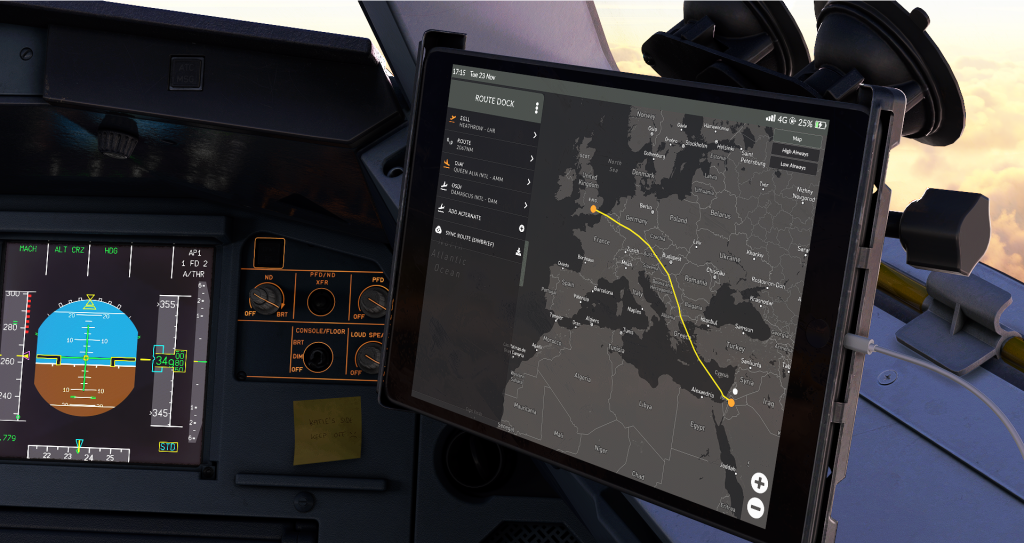
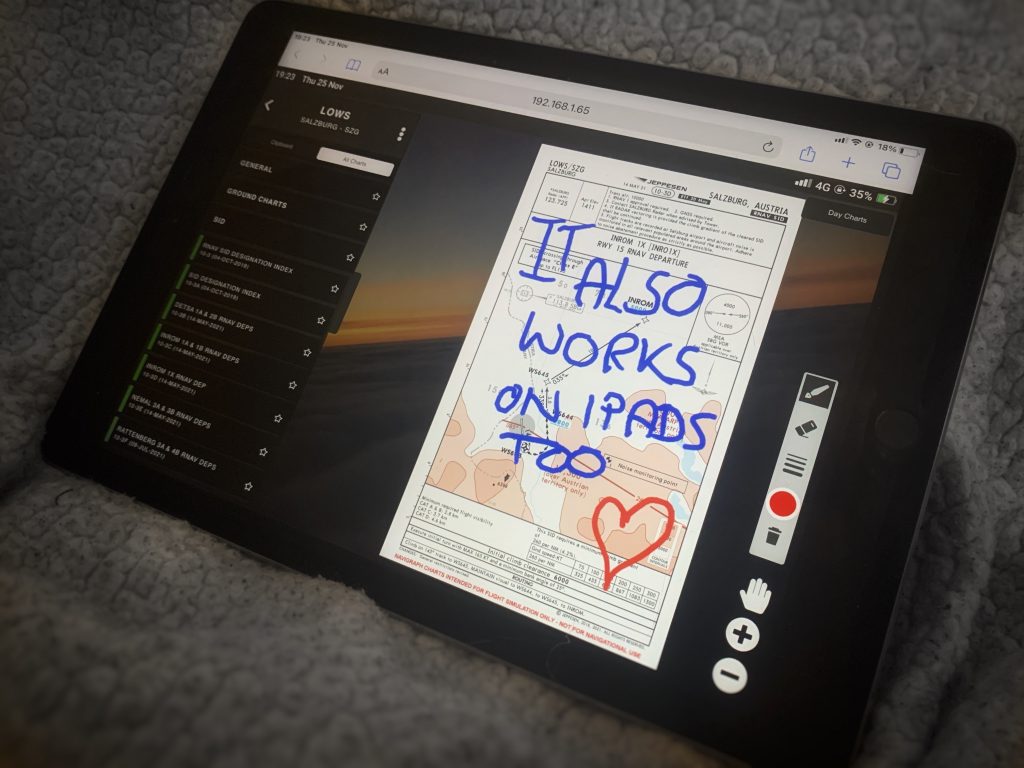
The EFB has also seen significant progression, where at this stage – the team has incorperated the ability to draw annotations and notes to your Navigraph charts. A landing distance calculator is also coded in, capable of accounting for failures that lead to a “LDG DIST PROCEDURE APPLY ECAM” message while also displaying your landing distance with a 15% “safety” margin that pilots are required to account for when calculating their landing distances. Overall, the EFB is coming along stunningly which is something the team is extremely optimistic about.


The team has taken an innovative approach to creating the tablet, which appears to be treated as an independent component to the aircraft experience, this conveniently provides automatic updates to the app so users wouldnt need to wait for an aircraft update to see their table updated. This approach also brought more seamless integration with documents such as downloading your OFP from SimBrief to your Pilot Briefing app and then export it directly into your Charts app to save time having to manually input them or import twice. There is also a bookmark like function that allows users to “star” charts to your own needs for ease of access when you need them quickly.
The app also makes use of “networked devices” such as your physical electronics (e.g. iPad), where annotations are much easier to do:
Aamir then wraps up the post by announcing that they’ll be diving deep into an intensive and critical stage of development, which will mean that they’ll take a back seat on updates as they go all hands on deck. An update will be provided when there is something to show in lieu of the previous arrangement where monthly weather checks from the team are expected which can be missed as circumstances change indoors. The recent updates for MSFS has also been a significant help; the team are happy of the changes which allowed them to iterate faster to send new builts to test more frequently which resultingly made them more productive overall. No promises for an end of the year check from Aamir, but if there aren’t any words from the team – they wish you happy holidays!